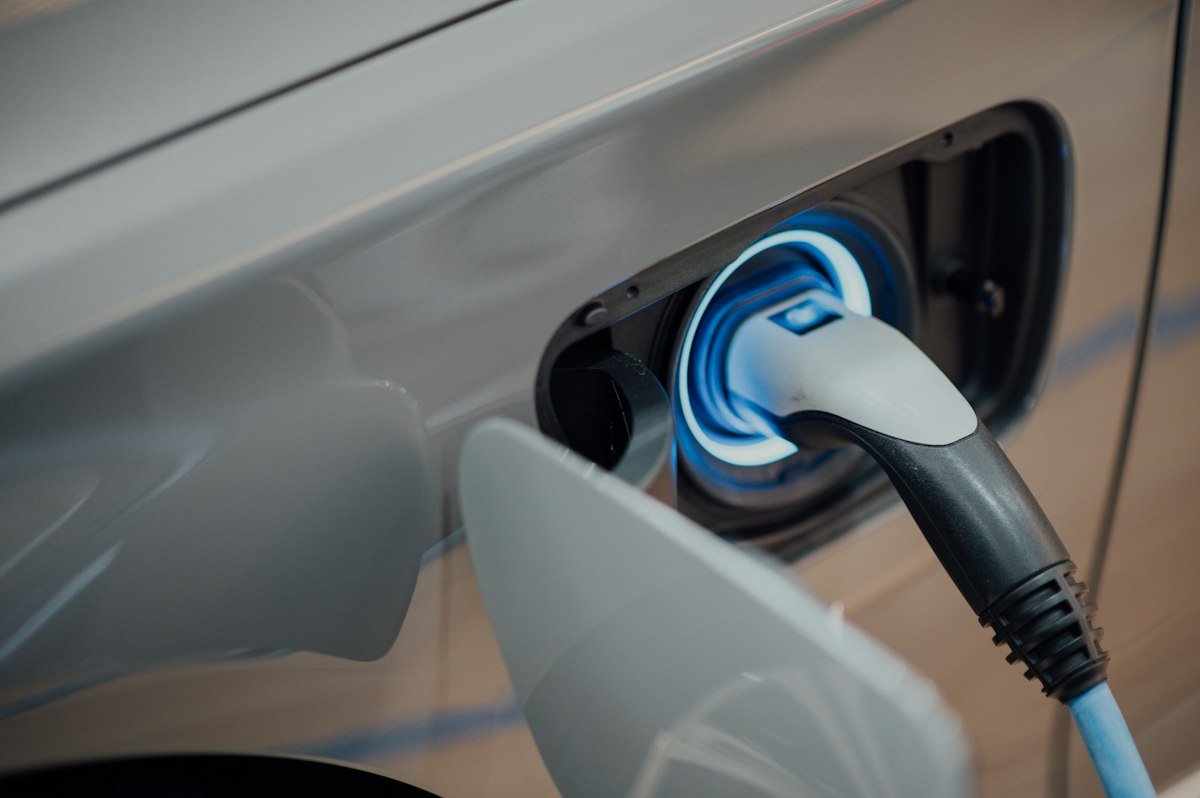
Licensed Level 2 EV Charger Installation on Long Island
Safe, hardwired 240V EV charging stations engineered for continuous high-amperage loads—installed cleanly in garages, driveways, and commercial parking areas across Nassau and western Suffolk.
At a Glance
Viking Electric & Design installs hardwired and NEMA 14-50 Level 2 EV chargers across Nassau County and western Suffolk from East Rockaway, NY. Every installation includes an NEC Article 625 continuous-load calculation, dedicated 240V circuit routing, dynamic load-management options when panel capacity is tight, and support for PSEG Long Island EV Make-Ready rebate documentation.
WHY CHOOSE VIKING ELECTRIC
- Free On-Site Estimates
- Permits & Inspections Included
- Nassau & Suffolk Licensed
- Based in East Rockaway
What Our EV Charger Installation Service Includes
Plug-in hybrid and battery electric vehicles draw more continuous electrical current than almost any other appliance in a residence. While an electric dryer or oven cycles on and off, a Level 2 EV charger pulls 32 to 48 amps continuously for four to eight hours overnight. Under National Electrical Code Article 625, EV charging equipment must be sized at 125% of the charger’s maximum continuous load—meaning a 48-amp charger requires a dedicated 60-amp 240V circuit.
Across Nassau County and western Suffolk, residential garages and driveways present distinct installation geometries: detached garages in Rockville Centre and Garden City requiring trenched PVC or rigid metallic conduit, tuck-under garages in split-level homes in Oceanside and Merrick, and exterior driveway pedestals along narrow South Shore properties in East Rockaway and Long Beach.
We install all major Level 2 hardware—including Tesla Universal Wall Connectors, ChargePoint Home Flex, Emporia, Autel, and Wallbox units—prioritizing direct hardwired connections or industrial-grade Hubbell/Bryant receptacles where plug-in flexibility is required. Never trust a consumer-grade $15 dryer outlet for daily EV charging; we use heavy-duty terminals torqued to manufacturer specification to prevent thermal overheating.
Why Homeowners Choose Professional Level 2 Charging
Upgrading from a standard 120V Level 1 wall outlet (which adds only 3–4 miles of range per hour) to a dedicated 240V Level 2 circuit transforms daily EV ownership:
- Add 25 to 44 miles of range per hour of charging so your vehicle reaches 80%–100% every morning during off-peak utility hours.
- Avoid melted receptacles and nuisance breaker trips caused by unpermitted 240V outlets or undersized wire gauges.
- Qualify for PSEG Long Island residential EV charger rebates and Time-of-Use (TOU) overnight super-off-peak electricity rates with proper permit and inspection documentation.
- Install UL-listed Automatic Energy Management / EVEMS load-shedding hardware if your home has a 100A or 150A panel and you want to avoid a full service upgrade.
- Weatherproof exterior mounting with clean EMT or Schedule 80 PVC conduit runs that complement your home’s facade rather than cutting corners across siding.
Our 4-Step Installation & Inspection Process
Every project is managed directly by founder Robert Neidecker from load calculation through final municipal underwriter sign-off.
Panel Capacity & Pathway Evaluation
We verify your main breaker rating, existing demand load, and the cleanest conduit or concealed pathway from your electrical panel to your garage wall or driveway mounting point.
Hardware Selection & Permit Filing
We confirm whether a hardwired 60A circuit (48A charging) or 50A circuit (40A charging) fits your vehicle and panel, pull the local electrical permit, and prepare documentation for PSEG Long Island incentives.
Dedicated Circuit & Charger Installation
We run copper conductors, install the dedicated two-pole breaker (including GFCI protection where required by code for receptacles), mount the charger, and torque all lugs with a calibrated torque tool.
Commissioning, Wi-Fi Setup & Inspection
We commission the charger firmware to match the breaker amperage, verify voltage under full charging load with your vehicle, and complete the municipal electrical inspection.
PSEG Long Island Rebates, Load Management & Detached Garages
PSEG Long Island offers incentives for qualifying smart Level 2 chargers and discounted overnight charging rates, both of which typically require installation by a licensed electrical contractor with a valid electrical inspection certificate. We ensure your invoice and inspection paperwork include all details required for your rebate application.
In older Nassau neighborhoods such as Rockville Centre, Garden City, Lynbrook, and Hempstead where detached rear garages are common, existing underground feeders are often single 15-amp or 20-amp cloth-insulated circuits. We install code-compliant underground trenches or overhead triplex spans to bring dedicated 60A or 100A subpanels directly into detached garages.
Long Island Standards We Enforce
- NEC Article 625 continuous-load sizing (125% rule) and outdoor NEMA 3R/4 enclosure ratings.
- Hardwired EVSE installation vs. industrial-grade NEMA 14-50 receptacle with GFCI breaker protection.
- Dynamic load management (Tesla Dynamic Power Management / Wallbox Power Boost / DCC) for constrained 100A panels.
Local EV Charger Installation Guides by Town
Select your community below for town-specific building department permit rules, utility disconnect requirements, and local project examples:
EV Chargers — Frequently Asked Questions
- How much does it cost to install a Level 2 EV charger on Long Island?
- Residential Level 2 EV charger installation costs depend on the distance from your breaker panel to the parking location, whether the wire run is surface-mounted or concealed/trenched, and whether your panel has available capacity. Call (516) 530-3840 for an upfront written estimate.
- Can I install a Level 2 EV charger on a 100-amp electrical panel?
- Often yes—either by configuring the charger for a lower amperage (such as a 20A or 30A 240V circuit delivering 15–22 miles of range per hour) or by installing an NEC-approved automatic load management device that pauses charging only when your home’s total load approaches the panel limit. Otherwise, we can upgrade your service to 200 amps.
- Is it better to hardwire an EV charger or install a NEMA 14-50 outlet?
- We strongly recommend hardwiring whenever possible. A hardwired connection eliminates the plug-and-receptacle failure point, supports higher 48A charging speeds (on a 60A breaker), avoids nuisance trips from GFCI breakers interacting with built-in charger ground monitoring, and is safer for outdoor driveway installations.
- Do I supply the EV charger or does Viking Electric & Design provide it?
- Either option works. If you already purchased a Tesla Wall Connector, ChargePoint Home Flex, or manufacturer charger, we will inspect and install it; or we can supply a commercial-grade UL-listed charger matched to your vehicle and panel.
Related Electrical Services
Electrical Panel Upgrades
Replace undersized or obsolete breaker boxes, weatherheads, and service entrance cables with clean, code-compliant 200-amp power engineered for modern South Shore and Nassau County homes.
Generator & Transfer Switch Installation
Protect your home or business from coastal nor’easters, hurricane outages, and grid failures with code-compliant automatic transfer switches, portable generator inlets, and whole-home backup power.
Emergency Electrical Repair
Rapid, methodical electrical diagnostics and hazard mitigation for burning panel odors, partial power loss, storm-damaged service drops, and dead critical circuits.
Where We Work
Based in East Rockaway, NY. Our core service area is the South Shore of Nassau County, central and eastern Nassau, and western Suffolk. We also take jobs in the five boroughs by appointment.
South Shore Nassau
East Rockaway, Oceanside, Lynbrook, Hewlett, Woodmere, Cedarhurst, Lawrence, Atlantic Beach, Island Park, Long Beach, Baldwin, Freeport, Rockville Centre, Bellmore, Merrick, Wantagh, Seaford
Central & Eastern Nassau
Valley Stream, Franklin Square, Garden City, Mineola, Hempstead, East Meadow, Massapequa, Farmingdale, Bethpage, Levittown, Hicksville, Plainview, Jericho, Syosset
Western Suffolk
Amityville, Copiague, Lindenhurst, Babylon, West Babylon, North Babylon, Deer Park, Melville, Huntington, Huntington Station, Commack, Dix Hills